
If your lower back has been niggling for weeks — or years — you already know how much it steals from the day. Getting out of the car hurts. Sitting at a desk hurts. Picking up a grandchild, a toolbox or a washing basket becomes a calculation. At Body & Soul Chiropractic in Brighton, we spend a large part of every week helping people from across North Brisbane work out what is driving their lower back pain, and putting together a clear, gentle plan to ease it.
What lower back pain actually is
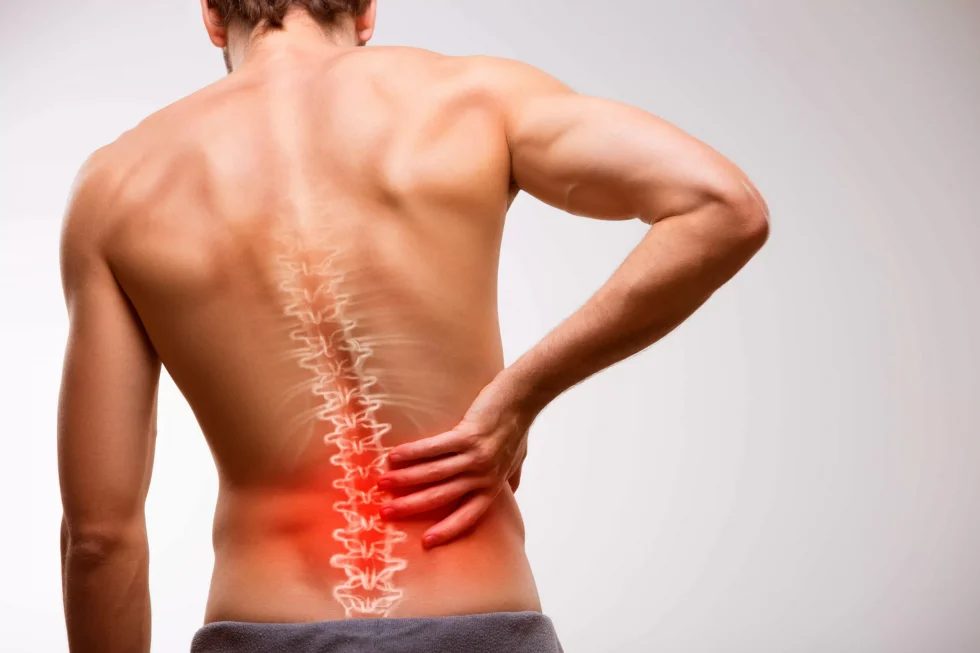
Lower back pain is a symptom, not a single diagnosis. The pain can come from the joints of the lumbar spine, the discs that sit between those joints, the muscles and ligaments that support them, the sacroiliac joints of the pelvis, or a nerve that is being irritated as it leaves the spine. Sometimes it is a mix of all of the above.
That is why two people with “the same” back pain can need quite different care. A desk worker from Sandgate with a stiff, aching back after eight hours in a chair is not the same presentation as a builder from Clontarf who felt a sharp catch lifting a pack of tiles, or a new mum from Redcliffe whose pelvis has not settled since birth. The job of the first visit is to tell those stories apart.
Common causes we see at Body & Soul
The patterns that walk through our Brighton clinic are remarkably consistent:
- Long hours of sitting — office work, driving, and the commute across the peninsula — leaving the lumbar joints stiff and the hip flexors short.
- A disc that is bulging or irritated and referring pain into the buttock or leg.
- Joints in the lower spine or pelvis that have stopped moving well after a lift, a twist, or years of the same job.
- Muscle guarding — the back tightening up to protect itself, which then becomes a problem of its own.
- Pregnancy and postpartum changes in the pelvis and lower spine.
- Age-related wear, often called degenerative disc change or spondylosis, which does not mean you have to live in pain.
Poor sleep support, stress and the way you move through the day all pile onto those mechanical issues. None of this means the pain is “in your head.” It means the whole picture matters.
Signs it is time to get the back assessed
- Pain that has lasted more than a couple of weeks, or that keeps coming back.
- Pain that travels into the buttock, thigh, leg or foot.
- Pins and needles, numbness, or a leg that feels heavy or weak.
- Stiffness first thing in the morning, or after sitting.
- Pain that is stopping you walking the foreshore, working, training or sleeping.
A smaller group of symptoms needs medical review first — unexplained weight loss, fever, pain that wakes you every night, or sudden bladder or bowel change. If any of those are present we will say so plainly and help you get the right opinion.
How chiropractic care may help lower back pain
The goal is simple: reduce irritation, restore comfortable movement through the lower back and pelvis, and give you a plan you can keep going with at home and at work.
After a thorough assessment, Dr Rob or Dr Scott will match the technique to you. That may include gentle diversified adjustments, low-force options such as Activator or SOT, flexion-distraction (a slow, rhythmic stretch that many disc and stiffness cases tolerate well), soft-tissue work, and specific movement advice. Care is always explained first. If you prefer a very gentle approach, that is completely fine.
Our spinal decompression table — useful when a disc is part of the picture
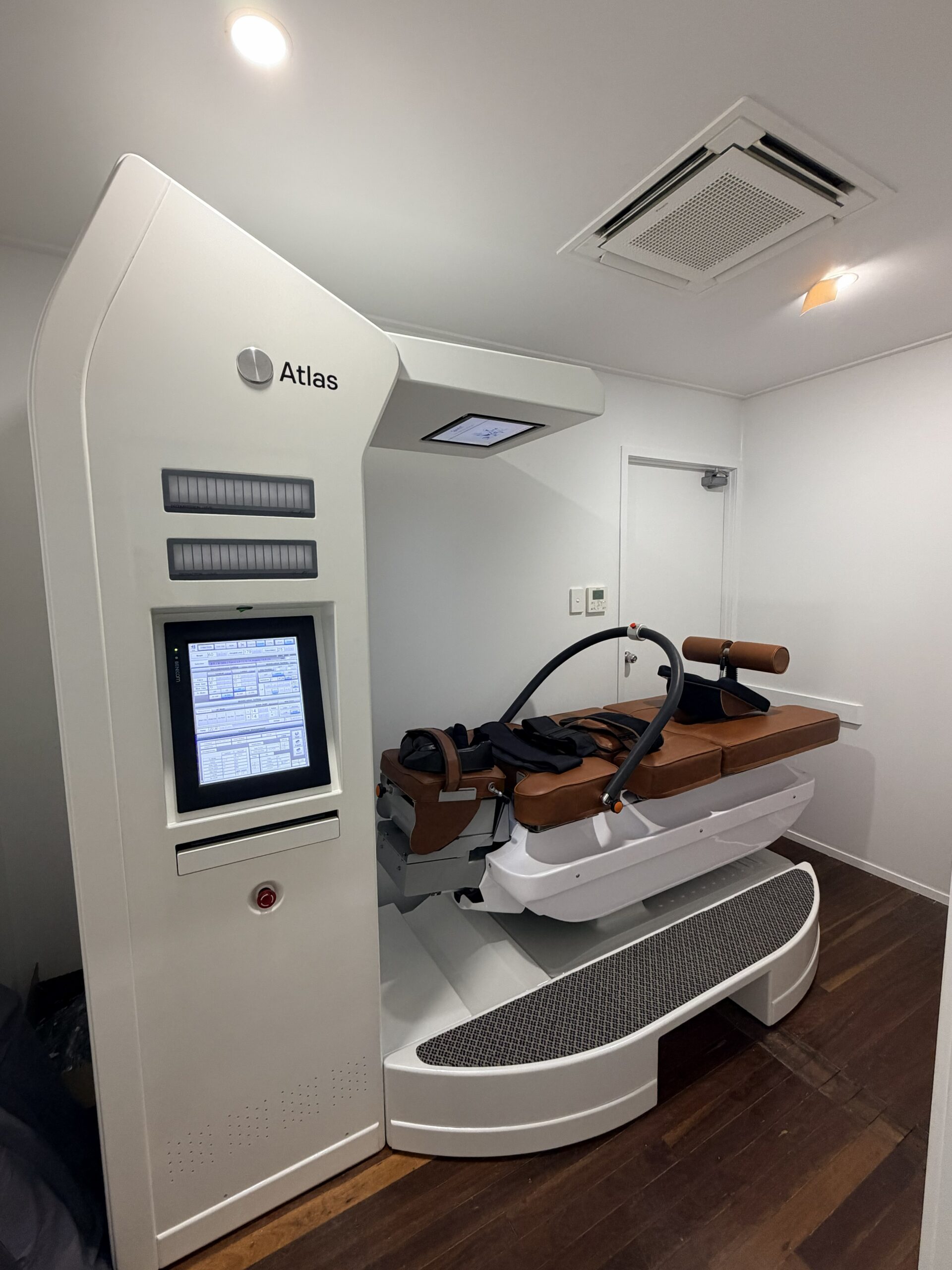
One thing that sets the Brighton clinic apart is our MT Core spinal decompression table. For lower back pain driven by disc pressure, decompression gently stretches the spine in a controlled, computer-assisted way. The aim is to create a little space between the vertebrae, reduce load on the disc and nearby nerves, and give irritated tissue a chance to settle. Most people find it comfortable — a slow stretch, not a crack. It is not a magic machine and it is not right for everybody, which is why we assess first. Combined with hands-on care and simple home work, it is one of the more useful tools we have for stubborn, disc-related back pain.
What the first visit looks like in Brighton
Your first visit starts with a proper conversation. We want the history, how the pain behaves through a day, what you have already tried, and what you want to get back to — work, walking the dog along Sandgate foreshore, lifting grandchildren, training.
The assessment typically includes a health history, orthopedic and neurological testing, range of motion, and digital postural screening. We may recommend an X-ray if it would genuinely change the plan. Then we explain the findings in plain language and outline a suggested course of care. No referral is required. Many of our patients use private health extras.
We care for people at every stage of life across Brighton, Sandgate, Shorncliffe, Deagon, Bracken Ridge, Woody Point, Clontarf, Margate, Redcliffe and Kippa-Ring.
What you can do this week while you wait for your appointment
- Avoid long, unbroken sitting. Stand up and walk for two minutes every half hour.
- Keep gently moving. Complete rest usually makes a mechanical back stiffer.
- Use heat over tight muscles if it feels soothing; use ice briefly if a spot is hot and angry.
- When you pick something up, bring it close and hinge at the hips rather than rounding the lower back.
- Notice your pillow and mattress. A back that is unhappy all night is harder to settle during the day.
These are holding patterns, not treatment. The useful work starts once we know which structure is unhappy.
Ready to get your lower back assessed?
You do not have to wait until the pain is unbearable, and you do not have to assume surgery or a lifetime of tablets is the only path. If lower back pain is getting in the way of work, sleep or family life, we would be glad to take a look.
Book your assessment online any time, or call the Brighton clinic on (07) 3608 8814.
FAQ
How long does lower back pain take to improve? It depends on the cause and how long it has been there. Some people notice a change within a few visits. Disc-related or long-standing cases take longer. After the assessment we will give you an honest idea of what to expect.
Do I need a scan before I come in? Not usually. We assess first and refer for imaging when it would change what we do. If you already have X-rays or an MRI, bring them.
Is chiropractic safe for a disc problem? For many people, yes — with techniques chosen to suit the disc, including flexion-distraction and decompression. We assess first and refer on if a presentation is not right for us.
Do I need a referral? No. You can book directly. Private health extras often contribute to care.
Do you only see people who live in Brighton? Not at all. A large share of our patients drive from Sandgate, Shorncliffe, Redcliffe, Clontarf, Woody Point, Bracken Ridge and the wider North Brisbane area.