

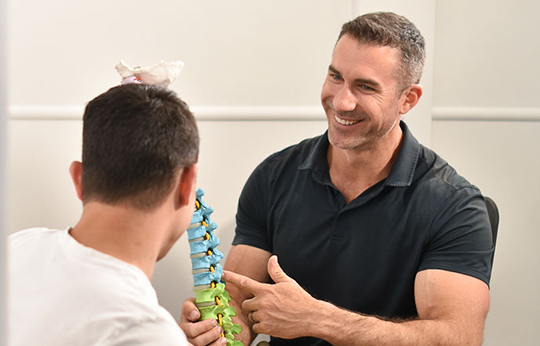
Chiropractic care focuses on the musculoskeletal system, especially the spine, and its connection to the nervous system. Because the spinal column houses and protects the spinal cord, spinal health directly influences nerve communication, movement, and overall body function.
While chiropractic care does not treat systemic diseases, research shows that spinal adjustments may affect nerve signaling, sensorimotor integration, and autonomic function, potentially supporting overall health and quality of life.
Understanding the Spine-Nervous System Connection
The nervous system is the body’s control centre, made up of:
-
The central nervous system (CNS): brain and spinal cord
-
The peripheral nervous system (PNS): nerves connecting the CNS to muscles, organs, and tissues
Spinal joints influence nervous system function. When vertebrae move freely, sensory input from joints, muscles, and ligaments reaches the CNS more efficiently. This sensorimotor integration is essential for balance, coordination, and movement.
Research highlights that spinal manipulation may enhance sensorimotor processing, supporting proper neuromuscular function
How Chiropractic Adjustments Influence the Nervous System
Sensorimotor and Neural Benefits
Spinal adjustments, particularly high-velocity, low-amplitude (HVLA) techniques, can influence neural input and brain activity. Studies show:
-
Changes in brain activity during pain processing after adjustments
-
Improved proprioception and motor coordination in patients with low back pain
These findings suggest that chiropractic care may help the nervous system process sensory signals more efficiently, potentially improving movement and reducing discomfort.
Effects on the Autonomic Nervous System
The autonomic nervous system (ANS) regulates involuntary functions like heart rate, digestion, and stress response. Research indicates:
-
Cervical adjustments may influence parasympathetic activity, helping the body relax and lower stress markers
-
Thoracic and lumbar adjustments may affect sympathetic activity, impacting circulation and tissue perfusion
While findings are promising, results vary, and more research is needed to fully understand these effects.
Neuroplasticity and Nervous System Adaptation
Emerging studies suggest spinal adjustments may influence neuroplasticity — the nervous system’s ability to adapt:
-
Adjustments may affect neuroendocrine and immune pathways, offering systemic benefits beyond the spine
-
Measurable changes in tissues and mechanoreceptor signalling have been observed following adjustments, supporting improved joint and neural function
These neurophysiological effects can contribute to better movement control, reduced pain perception, and enhanced functional outcomes.
What Chiropractic Care Is and Isn’t
Chiropractic adjustments are specific manual techniques aimed at restoring spinal movement and reducing stiffness. They are:
-
Non-invasive
-
Drug-free
-
Focused on musculoskeletal and functional nervous system support
Chiropractic care does not treat systemic illnesses. Its goal is to support spinal function, reduce nerve interference, and enhance quality of life through improved movement and nervous system integration.
How Chiropractic Care Is Used in Practice
Chiropractors often combine spinal adjustments with:
-
Exercise and movement advice
-
Posture and lifestyle guidance
-
Soft tissue and mobility techniques
This holistic approach supports musculoskeletal health, nervous system function, and overall wellbeing.
Key Takeaways
Current research suggests chiropractic care may:
-
Enhance sensorimotor integration
-
Influence autonomic nervous system activity
-
Support neuroplasticity and adaptive nervous system responses
-
Improve movement, coordination, and functional ability
While chiropractic care is safe and non-invasive, outcomes vary by individual. Consultation with a registered chiropractor ensures a personalised approach based on evidence-informed practice.
References
Haavik, H., & Murphy, B. (2012). The role of spinal manipulation in altering central neural plasticity: A review of concepts and evidence. Journal of Electromyography and Kinesiology, 22(5), 768–776. https://doi.org/10.1016/j.jelekin.2012.05.008
Daligadu, J., Haavik, H., Yielder, P., & Murphy, B. (2013). Spinal manipulation alters sensorimotor integration: A systematic review of the literature. Journal of Manipulative and Physiological Therapeutics, 36(7), 411–426. https://doi.org/10.1016/j.jmpt.2013.06.006
Kavounoudias, A., Roll, R., & Roll, J.-P. (2001). The effect of spinal manipulation on postural control and sensorimotor integration. Clinical Neurophysiology, 112(7), 1283–1293. https://doi.org/10.1016/S1388-2457(01)00575-3
Gay, R. E., & Nelson, M. A. (2013). Chiropractic care and the autonomic nervous system: A narrative review. Chiropractic & Manual Therapies, 21(1), 27. https://doi.org/10.1186/2045-709X-21-27
Zhang, J., Zhang, Y., & Liu, X. (2019). The effect of cervical spinal manipulation on cerebral cortical activity: A systematic review. Frontiers in Human Neuroscience, 13, 251. https://doi.org/10.3389/fnhum.2019.00251
Bialosky, J. E., Bishop, M. D., & Robinson, M. E. (2009). Spinal manipulation alters pain processing: A systematic review. Journal of Pain, 10(6), 601–609. https://doi.org/10.1016/j.jpain.2009.01.001
Lund, I., Lundeberg, T., & Björklund, M. (2014). Neurophysiological effects of spinal manipulation: Implications for clinical practice. Manual Therapy, 19(1), 1–6. https://doi.org/10.1016/j.math.2013.10.004