


If you’ve been experiencing muscle pain, tension, or restricted movement, you might have heard about dry needling. This treatment is offered by Dr Rob and the team at Body & Soul Chiropractic as a complementary option alongside chiropractic care to help manage musculoskeletal pain and improve recovery. In this blog, we’ll explain what dry needling is, how it works, the potential benefits, and what the research says.
What Is Dry Needling?
Dry needling is a minimally invasive therapy that involves inserting thin, sterile filiform needles into specific spots in muscle tissue called myofascial trigger points. These trigger points are tight, hypersensitive bands within a muscle that can contribute to pain, tension, and limited movement. Unlike acupuncture, which follows traditional Chinese medicine meridians, dry needling targets muscle and connective tissue directly based on modern anatomy and clinical reasoning.
Dry needling is commonly used by trained health professionals, including chiropractors, physiotherapists, and other clinicians, provided they have appropriate training and qualifications.
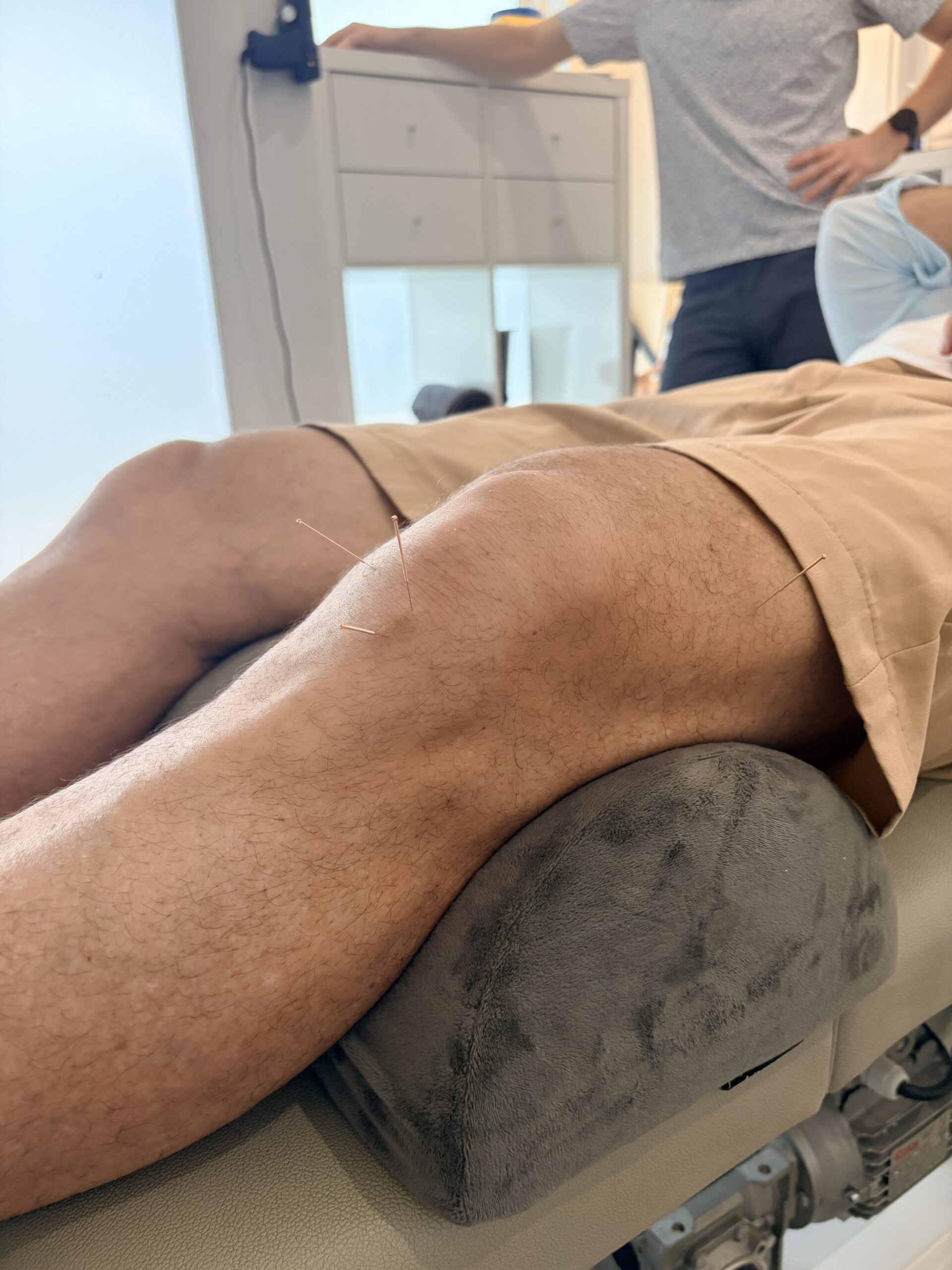
How Does Dry Needling Work?
When a fine needle is inserted into a trigger point:
-
It may cause a local twitch response, which can help reset muscle tension and reduce pain.
-
Needling may increase local blood flow and oxygenation, supporting tissue repair.
-
It can interrupt abnormal nerve signals associated with pain and sensitivity.
These mechanisms may stimulate the nervous system and help reduce muscle tightness and discomfort, especially when combined with movement and chiropractic care.
Benefits of Dry Needling (What the Research Shows)
Dry needling is often used as part of a broader treatment plan for muscle and joint issues. While evidence varies in quality, peer‑reviewed research supports several potential benefits:
1. Short‑Term Pain Relief
Systematic reviews suggest that dry needling may decrease pain intensity in the short term compared with no treatment or sham needling, especially for musculoskeletal pain conditions.
2. Reduced Muscle Tension
By targeting muscle trigger points, dry needling can help reduce muscle tightness and improve comfort.
3. Improved Range of Motion
Patients may experience greater mobility and flexibility after dry needling, particularly in areas previously restricted by muscle tension.
4. Functional Improvement
Several clinical studies have shown that dry needling can help improve functional outcomes, such as reduced pain and improved ability to move, especially when combined with exercise.
5. Complementary to Other Therapies
Dry needling is often used alongside chiropractic adjustments, exercise programs, and manual therapy to enhance overall outcomes by addressing both joint function and muscle restrictions.
What the Research Literature Says
A systematic review found that dry needling may result in increased pain threshold and reduced pain intensity in patients with musculoskeletal pain in the short term (up to 12 weeks).
Another study in chronic low back pain demonstrated beneficial effects on pain and functional outcomes when dry needling was part of a structured treatment program compared to sham needling.
There is also some evidence supporting dry needling as an adjunct in the management of tension‑type and cervicogenic headaches when used with conventional care, though further high‑quality trials are needed.
Safety and Considerations
Dry needling is generally considered safe when performed by trained clinicians. Minor side effects such as temporary soreness, mild bruising, and brief discomfort are common.
Like any intervention involving needles, there are risks that are uncommon but important to consider, such as bleeding, transient pain, or very rare complications if applied improperly. These risks are greatly reduced when needles are handled by a qualified professional using sterile technique.
At Body & Soul Chiropractic, dry needling is performed by trained practitioners who understand anatomy and safety protocols, ensuring your care is both effective and safe.
Is Dry Needling Right for You?
Dry needling may be a helpful addition if you are dealing with:
-
Muscle tension, knots, or trigger points
-
Persistent muscle pain
-
Limited range of motion
-
Pain that hasn’t responded fully to manual therapy alone
-
Athletic or overuse‑related discomfort
At Body & Soul Chiropractic, Dr Rob offers dry needling as one of several tools designed to support your body’s recovery and comfort. While research continues to evolve, current evidence suggests dry needling may help reduce pain, decrease muscle tension, improve movement, and complement other manual therapies when administered appropriately.
If you’re curious whether dry needling could help with your pain or muscle tension, speak with our team or Dr Rob (chiropractor) about a thorough assessment and tailored treatment plan.
Reference List
Huang, T.‑H., Chen, S.‑H., & Lee, Y.‑C. (2017). The effectiveness of trigger point dry needling for musculoskeletal conditions: A systematic review and meta‑analysis. Journal of Orthopaedic & Sports Physical Therapy, 47(3), 133–149. https://pubmed.ncbi.nlm.nih.gov/28158962/
Llamas‑Ramos, R., Pecos‑Martín, D., Gallego‑Izquierdo, T., Plaza‑Manzano, G., & Blanco‑Rojas, L. (2020). Effects of trigger point dry needling for nontraumatic shoulder pain of musculoskeletal origin: A systematic review and meta‑analysis. Physical Therapy, 100(11), 1928–1942. https://pubmed.ncbi.nlm.nih.gov/33340405/
Rodríguez‑Huguet, M., Vinolo‑Gil, M. J., & Góngora‑Rodríguez, J. (2022). Dry needling in physical therapy treatment of chronic neck pain: Systematic review. Journal of Clinical Medicine, 11(9), Article 2307. https://doi.org/10.3390/jcm11092370
García‑de‑Miguel, B., et al. (2022). Dry needling in active or latent trigger point in patients with neck pain: A randomized clinical trial. Scientific Reports, 12, Article 13854. https://doi.org/10.1038/s41598-022-07063-0
Konrad, A., Schubert, M., Pfingsten, M., & Haake, M. (2024). Effects of dry needling on hip pain and function: A systematic review of randomized clinical trials. Musculoskeletal Care, Article e12345. https://pubmed.ncbi.nlm.nih.gov/38149616/
Fernández‑de‑Las‑Peñas, C., & Dommerholt, J. (2015). Dry needling in the management of myofascial trigger points: A systematic review of randomized controlled trials. Journal of Bodywork and Movement Therapies, 19(3), 523–533. https://pubmed.ncbi.nlm.nih.gov/28735825/